Friday, December 9, 2011

JISAD-“Guiding youth, Spurring smiles”.


Acquiring and developing the skills that provided employment is need of hour, especially for rural youth. JanMitram undertakes different skill development for the school drop-outs and existing workers especially in the informal sector. This is done in close consultation with industry, micro enterprises in the informal sector, experts and academia. This year , over 500 youth were trained in different programme assisted by NABARD, State and Central Government funds. Also we implemented Skill development programmes for SBI sponsorship R-seti this year.  

Establishment of JISAD

 Raigarh district of Chhattisgarh is repidly growing as industrial hub and more than 200 industries in different sectors have set foot in the area. This has also spurred growth of ancillaries, finance and service sectors. Thereby, demand of skilled man power has risen steeply.

A decade back, Raigarh was a backward district and scenario regarding education, entrepreneurship and skills was grim. Since then, it has shown the little development, forcing industries to fetch skilled people from outside. This poses a threat of local unrest in coming times. However, Industries and ancillaries cannot hire all land-looser, affected people who are unskilled merely to meet demand of employment. Industry affected people and general youth has to take-up the opportunities of wage or self employment in other institutions, doing business with industries or getting benefit of their existence by any means. The district needs tremendous number of Computer accountants, Computer operators, Tax return preparers,(Finance industry) HMV and LMV Drivers, Automobile mechanics(Transportation industry), Mesons, plumbers, Electricians, (Construction industry),welders, fitters, Machinist (Ancillaries), Stenos, Security guards and house-maid (Services) etc.
JanMitram Institute of Skills and Development 
However, the mindset of youth leans towards white collar wage employment. One has to fight with this mindset and also develop entrepreneurship and skills to counter the unrest growing in peoples mind. The conventional mechanism of skill development viz. ITIs in the district is paralyzed and suffering with own problems. Therefore JanMitram, last year started JISAD- JanMitram Institute for skill development. The JISAD provides Carrier Counseling, Vocational Trainings and skill development services, with a motto of “Guiding youth, Spurring smiles”.

The JISAD is now entrusted to conduct all skill development and vocation trainings of JanMitram. This year JISAD conducted many in house and External Training this year.

 NABARD Assisted SDP on lac handicrafts
In last few years, JanMitram has successfully promoted lac handicrafts in Raigarh district. Over 300 SHG women and youth have got training in this trade and most of them are working successfully. Raigarh integrated shellac association and JanMitra Marketing and consultancy limited, are providing handholding and marketing support to these trainees.
With time, it was felt that product range is limited and also many of artisan need improved training and equipments, for achieving better finishing. Nabard came forward and sanctioned a skill development programme for thirty trainees in Chhote gumda and Bade gumda villages. (also see http://janmitram.blogspot.com/2011/07/success-stories-from-lac-handicraft.html)

The training curriculum consisted making of jewelries, application of dyes and moulds, making new colures etc. The training went on for 45 days. DDM –NABARD regularly visited the programme and finally all the trainees were awarded with certificates.
Distribution of Handicraft Tool kits to Lac Handicraft Artisans
Distribution of Handicraft Toolkits: It is worth mentioning that DRDA Raigarh assisted all handicraft artisans by providing toolkits to all lac handicraft trainees. The toolkits were supported by BRGF livelihood component. Block Development officer of Gharghoda attended the programme and distributed toolkits to all beneficiaries. APO-ZP Mr. D.K.Makwana , I/C of BRGF programme also attended the ceremony.

Computer Accountancy Training
Computer Accountancy is a potential trade for wage employment in given scenario of Raigarh. Therefore 50 educated unemployed youth from rural areas were taken for training in these trades.


The training was assisted by DRDA under BRGF-Capacity building component. The traiing was tow months long and trainees learnt basic accounting, Tally based accounting, Tax calculation etc.. This was followed by apprenticeship in local chartered accountants’ offices.


Heavy industrial vehicle driving training
Contraction and industrial activities are increasing in Raigarh and nearby areas. There are about 300 JCBs, 200 Dozers, 50 Hydra, 35-50 pokleins in Raigarh, Tamnar and nearby area. These vehicles are Very costly and need careful operation. However, no training facility for drivers is available. Unskilled drivers are accident-prone and most of the time brings damage to costly heavy-duty machines. Therefore there is a good demand for trained drivers.

JISAD initiated the training with assistance of DRDA’s BRGF scheme. M/S dynamic Engineering, Sole distributor of JCBs in Chhattisgarh, collaborated with programme.  50 schools dropped, unemployed youth joined the trainings

Industrial Vehicle Driving Course is a huge success 
 Theory and practical session went on for one month and then apprentice with JCB owners was provided. Poor student also got assistance for obtaining HMV driving license.


MFI Sangwari Training
Microfinance is a growing business in rural areas. Microfinance agents need to know group approach for thrift; saving etc. they also need to learn motivation of Self help groups, Joint liability groups, common interest groups etc. we found it a unique wage employment orientated trade.Therefore , training for 50 youth and elders, having inertest for social service were chosen from all over the district and with this eight weeks training, learn the group handling technique. Theory and practical went side by side. 


After training two month apprenticeship was given inside JanMitram, under Sanjivani Programme (Discussed earlier.) this not only provided employment opportunity to trainees, but also a village resource person to SHGs at village level.

Computer operation – MADA Pocket Scheme 
Computer literacy has become essential for youth to get wage employment in most of sectors. MADA pocket scheme, which is developmental scheme of CG government for some specific tribes, is running in selected villages.  JISAD has conducted computer operation training in two villages this year. 


The programme was coordinated by District employment officer. This ninety days training trained 20 student in basic computer operation, especially MS-office and some other regular software.


R-SETI Trainings: Government of India is started comprehensive skill development initiative in collaboration with banks. Rural Self employment training institute has been started in the district under this initiative and State bank of India is hosting it in Raigarh. JanMitam is chosen partner for implementation of training programmes. In this year, following trainings were conducted with SBI-R-Seti. Details of training carried out by JISAD in collaboration with R-SETI   are hear-under. 
Motor Winding and pump set Repairing
Skilled servicemen for Motor winding and pump set repairing are unavailable in rural areas. These causes loss of time and maony for farmers. Under banner of SBI-Rseti, JISAD conducted a training for same in which 37 rural unemployed youth participated. Residential arrangement for trainees was made. 


Training conducted by skilled resource person and arrangement for regular test, Certification and apprenticeship were made.


Dairy Farming
Agriculture and allied activities still hold key of rural economy. Dairy activity is prominent livelihood option having tremendous potential. Therefore, SBI sponsored Rural self employment training institute took a batch of 30 young animal rearers, chiefly from pussure and baramkela block for weeklong course on dearly farming. 

Trainees learnt about cattle-feeding, rearing, Economics and many different aspects of dairy. One day  exposure visit was also organized at Jindal Dairy. The training started on 23rd Dec. and concluded on 30th December.  


 H. Advanced mobile repairing   
In this age of rapid communication, Mobiles are almost universal in people’s hands. Therefore, skill for repairing of mobile handsets is good source of self employment. Under banner of R-Seti, JanMitram conducted advanced mobile repairing training, started on 28th march. A total of 21 youth coming across the district participated in the training. 

A month-long training covered the handset technology, common faults, repairing, replacement, software downloading and many more issues enabling candidates to provide satisfactory service to clients. Beside, all the trainees got linked with successful mobile repairing shops for apprenticeship.  

Based on Annual Raport of 2010-11 
--------------------------------------------------------------------------------------------------------
Santosh Pandey ( Director- JISAD)  Contect : 09926644990
--------------------------------------------------------------------------------------------------------

SP Singh Memorial Scholarship : New Initiative of JanMitram


JanMitram is running variety of programme in field. Each and every member and volunteer of JanMitram feels empathy with poor and deprived people. Our primary focus is combating poverty; however, it is sometimes necessary to help people in those areas which are not out primary focus.  Education is foundation of a successful life.  We have seen many youth and girls dropping out of education due to financial constraints. Therefore, the managing board decided to establish a fund for providing scholarship to student belonging ultra poor families.

 JanMitram Scholarship for ultra poor

Four categories of scholarship were decided. For Boy’s higher and professional education i.e. MBA, BE, Medical etc, The S.P.Singh Memorial scholarship is started. Mrs. Janak Dulari Scholarship is for girls in same category. Both scholarships are established on name of parents of organization’s Secretary, Mr. Manish Singh.

Shri K.G.Goswami Scholarship for boys and Keser Goswami Scholarship for girls are founded in school education category. Both are parents of our President Dr. M.G.Goswami.

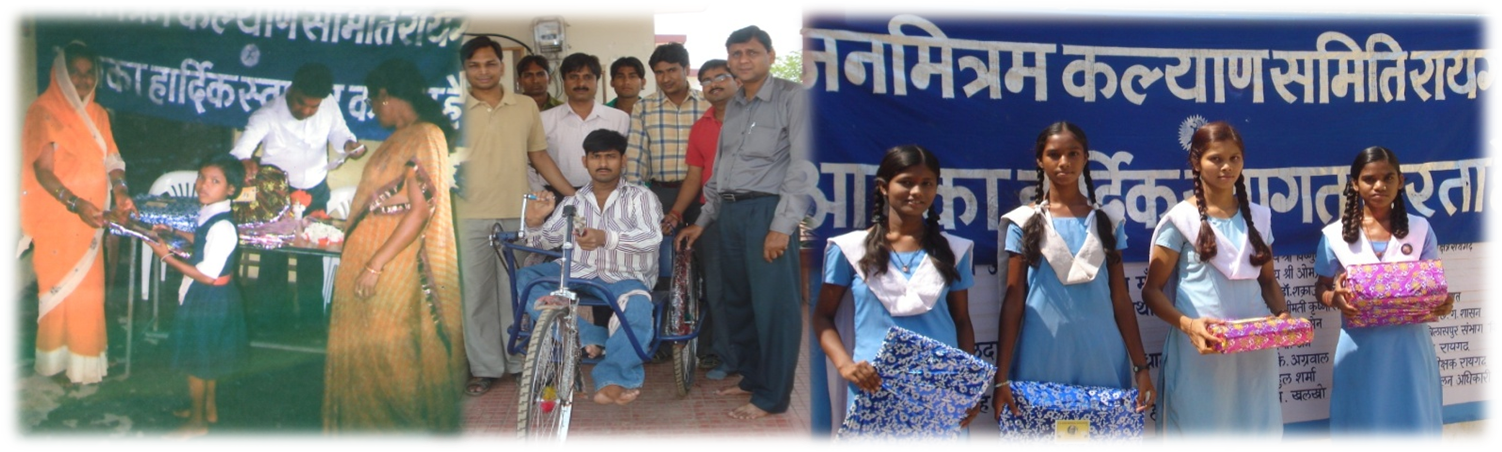
This was the first year of scholarship and four students got assistance for Engineering collage fee.  In School Education Category 74 Student assistance for Fees, uniforms, Books etc. one Handicapped was provided wheel chair to facilitate his collage visits.

JanMitram Institute For Skills And Development: Profile


Founded
2009 ( as a Division of JanMitram)
Location
About
Skills Deveopment of Youth and development interface

Description
The JISAD–JANMITRAM INSTITUTE FOR SKILL AND DEVELOPMENT was established to realize specific vision of JanMitram, To enable rural poor for recognizing opportunities available in our great democratic nation and getting hold on them. The institute concentrate solely on development of capacity among youth and rural leaders, including women.

JISAD also proceeds thorough knowledge sharing & technology dissemination towards socioeconomic development. The institute provides interface for academician, policy makers, implementers and professionals and organisations to built a new environment for sustainable and inclusive development. 
Mission
Vocational Trainings :
Development of technical and life skills, Skill Uprising of Rural Entrepreneurs & people’s associations

Development interface
Vision Building : Seminars and Workshops
Knowledge Sharing interface

Rural Management
Capacity Building of PRIs
Project Planning / Micro planning

Services
Resource Material Development
Monitoring and Evaluation
Survey and data analysis
Assessment studies
Awards
Not yet, As We do not submit applications for them
Products
Major Trades of Vocation Training

Handcrafts – Lac, Wood , Bamboo, Bell metal
Food preservation and processing
Agro based and allied activities
Tailoring and fashion technology
Two wheeler and diesel mechanic
Light, Heavy and earthmover driving
Accountancy – Manual and Computerized
Low cost housing material production
NTFP and forest produce – Trade and processing 
Email
janmitram@gmail.com
Phone
Website

The truth about farmer suicides in Chhattisgarh


A group of citizen journalists in Chhattisgarh is finding out why four farmers in the state are committing suicide every day, and why the government continues to deny this. They found that in a single district, Durg, 11 farmers had committed suicide due to debt, while 52 labourers took their lives for “economic reasons”
Why does India need a bunch of city-dwelling computerwallahs to discover that farmers in its villages are committing suicide in alarmingly high numbers? Does it tell us something about the health of our other institutions as well?
The journey that led to this discovery started at a Dream Chhattisgarh meet in December 2007. The Dream Chhattisgarh meet is an annual event of the Internet-based citizen’s journalism group CGnet.
Generally, people connected to the Internet are city-dwellers with limited understanding of the world of farming. This is true for most members of our group too.

To dream of a better future for Chhattisgarh it is important to understand the issues surrounding the profession that sustains 80% of the state’s population.
And so, at Dream Chhattisgarh meets, the first session is usually on agriculture; last year, farmers and agricultural experts were invited to inaugurate the meet at Champaran.
No, this is not the Champaran of indigo farmers where Gandhi experimented with his first satyagraha in India in 1917 (though it is a coincidence that the indigo farmers of Champaran, Bihar, were from the Kurmi caste and many farmers in Chhattisgarh’s Champaran too are Kurmis).
This Champaran is a village in Chhattisgarh, around 60 km from the state capital Raipur.
Chhattisgarh is not Vidarbha
At the meet, farmers described their pathetic condition to CGnet members. “The situation of the farmer is so bad today that a labourer working for me can eat a cauliflower,” one of them said, “but I must be satisfied with the stubs that we earlier used to feed to the animals.”
The issue of farmer suicides also came up.
We wanted to invite a specialist from Vidarbha to speak about what Chhattisgarh could learn from Vidarbha about farmer distress, and, perhaps, avoid making the same mistakes. But no one was able to join us from Vidarbha.
During the discussion, experts told us that they had never heard of any farmer suicides in Chhattisgarh. They had read a few news items on farmer suicides in Madhya Pradesh and how that state was amongst the top five states with respect to this issue. The figures for Madhya Pradesh included Chhattisgarh.
Participants also discussed an article by P Sainath, published a few weeks before the meet. The article referred to a study by Professor K Nagaraj of the Madras Institute of Development Studies which states that over 2,000 farmers commit suicide in Madhya Pradesh (including Chhattisgarh) every year.
The meet concluded that most of these suicides were probably happening in the cash crop areas of Madhya Pradesh, as we had never heard of any farmer suicides in Chhattisgarh.
The agriculture sub-committee of CGnet decided to explore the matter further.
The investigation begins
A Google search with the words “farmer suicide” and “Chhattisgarh” yielded the same P Sainath article discussed at the meet which gives the farmer suicide figures for Madhya Pradesh and Chhattisgarh jointly.
Was there no separate data on farmer suicides in Chhattisgarh, I wondered.
A call to Professor Nagaraj revealed that the data was indeed available and could be obtained from the National Crime Records Bureau (NCRB).
Nagaraj said: “There was no Chhattisgarh when I started the study in 1997. And after 2000, when the data for the three new states of Chhattisgarh, Jharkhand and Uttarakhand were made available, I simply added them to the parent states of Madhya Pradesh, Uttar Pradesh and Bihar for my convenience.”
So, were the figures for Chhattisgarh never investigated on their own?
A visit to the NCRB showed that, contrary to our assumption at the Dream Chhattisgarh meet, out of the 2,000-odd farmers who had committed suicide in undivided Madhya Pradesh, more than 1,200 were from Chhattisgarh!
The next week, I expressed my shock over this revelation in my weekly column in a local Chhattisgarh newspaper: ‘Four farmers commit suicide in Chhattisgarh every day, says the NCRB. Are the figures fudged?’
The next morning there was an article on the front page of the same paper ridiculing the figures. ‘Everybody loves a good fraud: The untruth of farmer suicide figures in Chhattisgarh’ was the title of the piece.
The article claimed that a survey done by the author had come across only six cases of farmer suicide in the state from the year 2000, when Chhattisgarh was formed. The author observed that many farmers had committed suicide but that the cause had nothing to do with livelihood.
Laughing at these claims, P Sainath told us: “If one farmer is committing suicide annually in Chhattisgarh, then the state must be a heaven! I would advise farmers from the US and Europe to shift to Chhattisgarh.”
More articles debating the issue followed.
The arguments presented claimed that Chhattisgarh was not Vidarbha. Farmers did not grow cash crops here; paddy does not need that much investment. So, farmers were committing suicide for non-farming reasons.
Jacob Nellithanam, who has been working with farmers for a number of years, contradicts this argument by saying: “Paddy is a cash crop for the farmers of Chhattisgarh.”
Meanwhile, the police chief of Chhattisgarh told the local press that the figures quoted were bogus and asked for proof.
The National Crime Records Bureau in Delhi responded: “If the figures are bogus then please ask the government of Chhattisgarh why they are sending bogus figures. We do not have any offices in the state; we publish what we get from the State Crime Records Bureaus.”
Why are farmers so prone to suicide?
I found the figures too disturbing to let go of the matter.
Professor Nagaraj had gone as far as to say that, according to his study, police records show only landowners as farmers. In reality therefore the number of farmers committing suicide would be greater than that reflected in the data.
The number of landowning farmers in Chhattisgarh, according to the economic survey of 2008, is 32.55 lakhs, which is a little less than 15% of the state’s total population. But farmers constitute 32.2% of the total number of suicides in Chhattisgarh.
What is it about a farmer’s livelihood that makes him twice as vulnerable to suicide as any other profession?
CGnet decided to investigate some cases on the ground.
The three cases we picked up from the local newspapers had not been recorded as farmer suicide cases in the police records. But all were directly linked to farming distress.
Highest rate of farmer suicides
Dr Yuvraj Gajpal, a CGnet member and post-doctoral student in Canada, calculated the farmer suicide rate per 100,000 population for the states and found, to his astonishment, that Chhattisgarh tops the list every year!
Around 6.49 farmers committed suicide in Chhattisgarh per 100,000 population in 2006. Maharashtra is a distant second, with 4.28, and Kerala third with 3.37. After that comes Andhra Pradesh, with 3.24, and Karnataka with 2.57.
Dr Gajpal wrote an article asking why farmer suicides in Chhattisgarh were not getting the attention they deserved, despite the fact that the state has more farmer suicide deaths per 100,000 population than the four states that have received so much attention on the matter.
We linked up with Professor Srijit Mishra of the Mumbai-based Indira Gandhi Institute of Development Research who has been asking the same question in his research papers for years.
Unlike Nagaraj and Gajpal, Mishra calculates the number of farmer suicides per 100,000 male farmers; he calls it ‘suicide mortality rate’.
Mishra wrote: “Whichever way you calculate, Chhattisgarh remains in the top five states as far as farmer suicides is concerned. But it is puzzling why neither the media nor the politicians have taken note of it.”
These articles managed to convince some leaders of the opposition Congress to raise the issue in the Vidhan Sabha.
The chief minister replied: “I have checked with all the collectors. No farmer has committed suicide in Chhattisgarh due to debt. Not the issue but the people writing about it need to be investigated.”
Discussing agriculture is a dangerous business
These threatening words were just the start of the suppression of the right to know the truth.
Applications under the Right to Information Act with the police yielded no results. Instead, I began receiving calls to “stop politicking in the name of journalism”. And my column was stopped on charges of writing “lies”, though it was unclear how the editor suddenly discovered they were “lies” after two years of carrying my articles every week!
It only strengthened my resolve to get to the bottom of the matter.
We started working like detectives; a simple story was turning out to be a crash course in investigative journalism.
Finally, through a circuitous route, we managed to get some figures from the State Crime Records Bureau.
The figures tell us that farmer suicides are concentrated in the paddy-growing districts of central Chhattisgarh; the tribal districts of the north and south have less than half the number of farmer suicides compared to the central region.
Was additional income from the forests saving farmers in the tribal region?
Districts with a higher suicide rate were the same as districts with the greatest fertiliser use. Is there a connection?
We realised that much of the resistance to our investigation centred around the argument that linked our claims directly to Vidarbha and farmer suicides resulting out of large loans taken for cash crops. Since the farmer in Chhattisgarh had no large loans, he was not committing suicide!
We were in fact not claiming that the situation in Chhattisgarh was the same as in Vidarbha; we were only asking for deeper investigation. Our request was being buried in irrelevant arguments.
Farming: a loss-making business
Our understanding of the seriousness of the issue is based on our exchange with a paddy farmer in Chhattisgarh who said: “Economic deterioration is being measured against incomes. A farmer growing paddy in Chhattisgarh has hardly any income these days. Agriculture is a loss-making business and is being sustained by the sale of assets!”
Farm scientist Sanket Thakur explains: “If you calculate the cost of labour at a minimum wage, then the production cost of paddy should be at least double the current support price.”
In most areas of Chhattisgarh, the wage rate is around Rs 30 per day. That is how the farmer saves some money. But with growing input costs, profits drop every year.
In places closer to cities, where one pays Rs 80 in labour costs, farmers make huge losses and survive only by selling bits of their land every year.
“This continuously decreasing income creates a feeling of hopelessness,” Thakur says. “Many times, this translates to suicide. You may find random immediate causes for a farmer’s suicide, but if you explore deeper, most of the time it is farming distress which is the main cause.”
Who is lying, the CM or police records?
Meanwhile, a CGnet member was busy collecting the police records for 24 thanasin the district of Durg. We were shocked to find 11 cases of farmer suicide on this small list. The cause of suicide was “debt”. Against the backdrop of the chief minister’s statement that no farmer in Chhattisgarh was committing suicide due to debt, we had expected the police records to match this claim.
It may be noted here that:
  • Durg is not the district with the highest number of suicides in the state.
  • The list available with us for Durg district is not complete.
  • The figures available are for 2004 only although the state has been in existence since 2000.
If this sample were extrapolated to the entire district, the figures for farmer suicides due to economic reasons would be higher.
Apart from the 11 farmers who committed suicide due to debt there are 21 cases on the list where cause of death has been listed as “economic reasons”.
The list also has the names of 52 labourers who committed suicide due to “economic reasons”. And, six labourers who committed suicide due to debt. It is indeed likely that, in rural areas, labourers are farm labourers who have taken land on lease from rich farmers; this is a common practice in Chhattisgarh. Many of the causes on this list are ambiguous and need to be examined by a competent agency. Mental and physical illness, tension, fights -– all could be linked to farm distress, says Sanket Thakur. Then there is the glaringly large number of cases where the cause has been listed as “unknown”.
We are trying to collect similar data for other districts too. We understand that suicide is a complex issue, possibly beyond the analytical capabilities of a citizen journalism investigative team.
In search of Gandhi
The 1916 Lucknow session of the Indian National Congress passed a resolution demanding the appointment of a committee by the British government to enquire into the agrarian crisis in Champaran. But the Congress in Chhattisgarh is satisfied with a statement from the chief minister saying that “no farmer has committed suicide due to debt”.
After the Lucknow Congress, Gandhi went to Champaran to lead the firstsatyagraha in India that resulted in the formation of the Frank Shy Committee to investigate the crisis. Gandhi was a member of that committee. The recommendation of the Shy Committee resulted in the passing of the Champaran Agrarian Law of 1918.
History tells us that what started in Champaran in Bihar resulted in India getting independence.
Will what’s happening in Champaran in Chhattisgarh lead to a better life for the Chhattisgarhi farmer?
(Shubhranshu Choudhary is a founder-member of the Citizens Journalism initiative in Chhattisgarh, CGnet [www.cgnet.in])

Sustainable agriculture reduces distress migration in Orissa


Thanks to intervention from MASS, migration from Orissa’s Bargarh district has reduced considerably as villagers have been encouraged to start their own kitchen gardens, keep goats and chickens, and set up seed and grain banks, thereby adding to their income from agriculture and reducing their dependence on unscrupulous moneylenders

Tularam Amari and his wife Padma Amari, who live in a remote village in Orissa, want their youngest daughter Meena to become a teacher. Meena is currently studying in Class XIII. “We want to make her a teacher,” the couple say confidently.
Just two years ago, when husband and wife used to migrate to Hyderabad and other places to make bricks and eke out a livelihood, they had decided to put an end to educating their two girl-children, Dileswari and Meena.
Tularam and Padma believed they were destined for a life without dreams, until, one day, they decided firmly to change things. It was at this critical juncture that volunteers from the NGO, MASS (Manav Adhikar Seva Samiti) persuaded them to take up vegetable farming. Today, the couple earns about Rs 1 lakh per annum from agro-based farming and poultry. They live in Temriamal village, Jharbandh gram panchayat, Paikmal block, Bargarh district, Orissa.
Migration woes
The experience of working in the brick kilns of Hyderabad is still alive in the couple’s memory. Padma says: “When we had to come back from Hyderabad after finishing work, towards the end of the season, neither the owner nor the sardar (middleman) squared our payment. And they did not arrange our return tickets. With no money in hand, we started for home. I was not sure how I would manage my two children en route. It took nine days to get to our village in Orissa. We travelled by train some of the way; the rest by foot. I had some broken rice with me to feed ourselves on the journey. My younger daughter kept asking for better food; the elder one would tell her that as their parents had not got their wages there was no money in hand to buy good food.” Padma wiped her tears away as she recalled those dark days.
People from Adibasi Padia, a hamlet in Kechodadar gram panchayat in the same block, also used to migrate to Ayodhya, Hyderabad and Kali Nagar (Andhra Pradesh) to make bricks. There are some pockets in Paikmal block where people have always migrated out of the state to meet their livelihood needs. Mostly, they migrate to the brick kilns of Hyderabad, Chennai and other such places.
This kind of migration is called debt migration, where labourers are given an advance to commit labour for seven to eight months in the brick kilns. Generally, the unit of labour in brick-making constitutes one male, one female, and a child. This unit is called ‘pathuria’. Advance money to the tune of Rs 15,000-Rs 25,000 is given to a pathuria. Because of the advance money, labourers work in semi-bonded conditions in the workplace. They face a lot of exploitation due to weak inter-state labour laws and their vulnerability in the destination states. Indeed, physical and mental harassment in all possible forms is characteristic of such migration. Despite this, people are forced to migrate due to lack of sustainable employment opportunities in their home district.
Revival of agriculture
MASS volunteers showed Tularam Amari how to cultivate the two acres of land they own to make it a viable unit. With a little support from the village self-help group, the couple dug a well on their land for water. They built a new house which is a little away from the village. Because they lived on the land they were able to pay full attention to cultivation. From a mere half-acre of vegetable cultivation, the family made a sustainable earning. Now, they harvest ladies fingers, cauliflower and cucumber and make a good living selling them.
“In fact, we have taken a holistic approach towards reviving various sources of livelihood for people, using local resources,” says Adikand Biswal of MASS. In the beginning, women were asked to form self-help groups (SHGs) at the village level. They were persuaded to save some of their income on a monthly basis. A collective saving by members supplemented by external support from the NGO created a small pool of money to meet people’s immediate cash requirements. People borrowed money at a low rate of interest from the SHG and bought paddy seed for farming. They also invested in goat-keeping, chicken farming and other forms of animal husbandry.
Investment in agriculture gave good returns, while returns from animal husbandry added to people’s incomes, enhancing their sustainability. With MASS’s help, people began to explore various government schemes for agriculture. With seed support from the government, they started kitchen gardens and experimented with vegetable farming. This served to enrich their daily diet. There was a time, recalls an old lady in Adivasi Padia hamlet, “when male members of the family would go out of the village to do daily labour, and the wives waited with the children for them to return with rice so they could prepare food for the day. On most occasions, the women of the family would starve to feed their children and male members”.
Premsila Bhoi was the first to experiment with the kitchen garden model. Today, it yields her a rich harvest and is financially remunerative. Last year, in 2010, she sold vegetables worth Rs 7,000 (with an almost negligible investment) grown on a small patch of land alongside the house. Many people in the area have since developed kitchen gardens.
Goat-keeping too has proved remunerative. Kain Bhoi has six goats, each of which she sold for Rs 6,000. Similarly, Prabha Bariha sold six goats within the last two to three years and made Rs 36,000. Most of the money was spent on food and on other consumption requirements.
Apart from a revival in agriculture, the villagers have also set up grain and seed banks to reduce their dependence on moneylenders, locally called sahukars.
Grain and seed banks
Some villages in the area have started grain banks with the purpose of storing foodgrain to use in the lean season. Earlier, during the monsoon, people would have no foodgrain stocks resulting in dependence on moneylenders who would charge a monthly interest rate of 10%. This dependence on borrowing led to a vicious cycle, as, after the harvest, almost all the villagers’ income would go to the moneylender to repay debts. Effectively, therefore, people were unable to enjoy their own harvest and were forced to seek work nearby or migrate out of the state. After the introduction of grain banks, where people contributed a portion of their harvest to the community-managed bank, stocks were available during the three rainy months of June, July and August. On one occasion, says a villager, the rain continued for eight long days forcing people to remain in the village. The sahukar(moneylenders) came to the village with rice, available at a high rate of interest. But the village had accumulated enough grain to sustain itself. No one took rice from the sahukar.
Likewise, seed banks were set up where a portion of the harvest was kept as seed for the next farming season. Earlier, it was the sahukar who would provide seeds; now people take it from the seed bank. The concept of grain and seed banks has helped restore people’s dignity and self-respect by dispensing with the need to borrow from unscrupulous moneylenders.
Reduced migration
Interventions like these have improved the distress migration scenario in the block, although migration has not been wiped out entirely. According to the available figures from two panchayats -- Jharbandh and Bartunda -- the quantum of distress migration has dropped. Of the total of 1,877 families in these two panchayats, 277 families migrated out of the district to work in 2009-10. In 2010-11, the number came down to 220 families. These are based on data collected by the NGO from the migration registers maintained in villages in these two panchayats.  
Children’s education
Inter-state migration takes a heavy toll on children’s education. Tularam says: “Continuity of children’s education was almost impossible owing to a seven to eight month stay out of the state when we were migrating. We decided to discontinue the children’s education. But now things have improved. Our older daughter appeared for the Class X exam, but did not pass. She is planning to appear again. And our younger daughter is in Class VIII.”
The additional income has not only helped further the education of migrant children, it has also impacted on the education of children from non-migrant families. Now almost all the children of Adibasi Padia hamlet attend school. “The improved self-sufficiency has particularly impinged on the education of the girl-child, which was neglected earlier,” says Lata Sahu, a grassroots activist from MASS. In fact, this comprehensive model of development has brought about a visible change in people’s economic and, consequently, socio-cultural lives.
(Pradeep Baisakh is a freelance journalist based in Bhubaneswar, Orissa)

Mr Nilekani, can you now feel Team Anna’s frustration?


Dear Mr Nilekani
Two and a half years ago, when you were appointed to head the Unique ID project, we celebrated it – for many reasons.
For one, it signalled that the Manmohan Singh government, fresh from its election victory, was ready to do business. Just the fact that it had handed over the responsibility of implementing so important a project of assigning a national identity card to every Indian, which had implications for everything from national security to the effective implementation of social welfare policies, to someone who had a proven track record in corporate excellence and could harness the power of technology suggested earnestness on the government’s part.
We had long been inured to seeing luddite netas and babus monopolise the policy and implementation space in government without a long-term vision or a sense of operational efficiency. Although there are instances of technocrats working the levers of the creaking bureaucratic machine and raising the bar – the name of E Sreedharan springs to mind – they were the exceptions that validated stereotypical notions of governmental inefficiency.
The induction of stellar professionals from the private sector, with a record of working in challenging corporate environments, a 360-degree view of a dramatically changing world and high standards of personal integrity counted, for us, as a fruitful harnessing of our national resources. We had hoped that your success in the unique ID project would inspire many more corporate titans with a track record of building great institutions – Deepak Parekh, perhaps, or S Ramadorai – to get involved in policymaking and implementation, and that they would be welcomed by the system.
Today, those hopes have been compelled to take a reality check.
Yesterday, the Parliamentary Standing Committee on Finance rejected the National Identification Authority of India (NIAI) Bill, effectively giving your unique ID project a kick in the butt.
For sure, panel members had forceful arguments to make in defence of their rejection of the Aadhar Bill: politicians and special interest groups have unsurpassed skills when it comes to sabotaging or slowing down legislation that serves a greater common good. Witness the unending drama about bringing an effective Lokpal Bill to check corruption, which has dragged on for decades. It needed a mass uprising, channelled by Team Anna, to finally get politicians to focus their minds – and even today they are still up to their dirty tricks to weaken the Lokpal.
We’re sure you find all these political and bureaucratic games intensely frustrating: you signed on to oversee this project in the belief that you were serving a larger national cause. And yet you find yourself boxed in and stymied by petty turf wars between politicians and bureaucrats. And even the Prime Minister, whose whole-hearted backing you appear to have, is unable to create enabling conditions for you to get the job done.
We share your agony and your frustration.
We only wish you would also share some of the frustrations of us common folks who too have been banging our heads against the stone walls of the government and the bureaucracy. I specifically allude to the frustration of Team Anna, which you appeared to belittle in an interview not so long ago.
At the height of Team Anna’s fast in August to get a strong Lokpal institution in place, you went on air and ridiculed Anna’s campaign as “naรฏve and simplistic”. You argued then that while a Lokpal was necessary, Team Anna had been “drinking the Kool-Aid”. You then hard sold your unique ID project as being a better device to combat corruption at the grassroots level, where the common folks interact with the government.
And although you said you empathised with people’s frustration over corruption, you argued that Team Anna’s protest was not justified. In every other way too, the overarching tenor of your comments suggested that you were batting for the government – and offering politicians an alibi.
“When a very serious parliamentary body (the parliamentary standing committee) has taken it (the Lokpal Bill) up for consideration, why are we not working through that system?” you asked rhetorically. “I have visited Parliaments in the UK, the US and France; I’ve met with top leaders across the world. The standing committee procedures are second to none. Let us respect that.”
You even suggested that the widely held negative perceptions about politicians were unfair. “I’ve been in public life for two years and my respect for politicians has gone up . I think they are extremely hardworking,” you said. “We have to respect our politicians.”
I dare say that after what the parliamentary standing committee and the politicians have done to slow down or sabotage your unique ID project, your estimation of them is somewhat different.
Remember, Mr Nilekani, this is what is happening to someone of your stature: you had everything going for you – a high profile, well-earned respect, the prime minister’s public backing. You’re convinced in your heart that what you’re doing is vitally important for the nation. And yet, you’re being slowly checkmated by the political system. If they could do this to you, imagine what they can do to powerless nobodies who are banging their heads against a system with entrenched vested interests.
Imagine the frustration of Team Anna, which is an outsider to the system, widely reviled by politicians for daring to challenge the corrupt system on which they thrive, and which has no political backing. And yet, when it goes on protest to pressure the government into acting, you called it “naรฏve and simplistic”.
I trust that after what happened to you, you have a better understanding of the frustrations of Team Anna.
Mr Nilekani, not all is lost. You can still redeem yourself in the eyes of those who yearn for a strong Lokpal Bill. Anna will be on a fast once again on Sunday to protest the continuing efforts to dilute the Lokpal Bill.
Come and join us. Let’s share stories of our frustrations: you can tell us about the obstacles to the unique ID project, and we’ll tell you why we are on the streets once again.
And together we’ll find a way to get the system to listen to all of us.
Yours-in-solidarity
An Indian

Wednesday, October 26, 2011

เคœिंเคฆเค—ी เคจ เคฎिเคฒेเค—ी เคฆोเคฌाเคฐा


เคœเคฌ เค›ोเคŸा เคฅा, เคคो เคชिเคคाเคœी เค•े เคธाเคฎเคจे เคœाเคจे เค•ी เคนिเคฎ्เคฎเคค เคจเคนीं เคนोเคคी เคฅी। เคตเคน เคœिเคธ เค•เคฎเคฐे เคฎें เคฌैเค เคคे, เค‰เคธ เค•เคฎเคฐे เคธे เคฌเคšเคคा เคฅा। เคชिเคคाเคœी เคธे เคฌाเคค เค•เคนเคจी เคนोเคคी, เคคो เคฎां เค•ा เคธเคนाเคฐा เคฒेเคคा। เคตเคน เคนเคฎाเคฐे เคฌीเคš เคฎें เคกाเค•िเคฏे เค•ी เคญूเคฎिเค•ा เคจिเคญाเคคी เค”เคฐ เคฎेเคฐे เคฒिเค เคตเค•ीเคฒ เคฌเคจ เคœाเคคी। เค‰เคจเคธे เคœिเคฐเคน เค•เคฐเคจे เค•ा เคธाเคนเคธ เคฎेเคฐे เคซเคฐिเคถ्เคคों เคฎें เคญी เคจเคนीं เคฅा। เคฏเคนी เคนाเคฒ เคฎेเคฐे เคฆोเคธ्เคคों เค•ा เคญी เคฅा। เคชिเคคाเคœी เคฎुเคเคธे เคฌेเคนเคฆ เคช्เคฏाเคฐ เค•เคฐเคคे เคฅे। เคฒेเค•िเคจ เคฏเคน เค•เคญी เค‰เคจ्เคนोंเคจे เค•เคนा เคจเคนीं เค”เคฐ เคจ เคนी เคฎैंเคจे เคฏเคน เค•เคญी เคœाเคจเคจे เค•ी เค•ोเคถिเคถ เค•ी। เคฏเคน เคฐिเคถ्เคคा เคฆोเคจों เคคเคฐเคซ เคธे เคฎूเค• เคฅा। เค‡เคธเคฎें เคเค• เค…เคœीเคฌ เค•िเคธ्เคฎ เค•ी เค…เคœเคจเคฌिเคฏเคค เคฅी। เคตเคน เคฌोเคฒเคคे เค•เคฎ, เคนुเค•्เคฎ เคœ्เคฏाเคฆा เคธुเคจाเคคे เคฅे। เคฎेเคฐी เคœिंเคฆเค—ी เค•े เคธाเคฐे เคซैเคธเคฒे เคตเคนी เค•เคฐเคคे। เคฎाเคจเคจे เค•े เค…เคฒाเคตा เค•ोเคˆ เคฆूเคธเคฐा เคฐाเคธ्เคคा เคจเคนीं เคฅा। เคฒेเค•िเคจ เคฎेเคฐे เคœเคตाเคจ เคนोเคคे เคนी เคฆुเคจिเคฏा เคฌเคฆเคฒเคจे เคฒเค—ी। เคชिเคคा เคฆोเคธ्เคค เคฌเคจ เค—เค। เค‰เคจเค•े เคธाเคฎเคจे เคฌैเค เคจा, เค‰เคจเคธे เค—เคช्เคชें เคฎाเคฐเคจा เคธाเคฎाเคจ्เคฏ-เคธी เคฌाเคค เคนो เค—เคˆ। เคนเคฎ เคธ्เค•ूเคฒ เค•ी เคซीเคธ เคฎांเค—เคจे เคฎें เคिเคเค•เคคे เคฅे, เค†เคœ เค•े เคฌเคš्เคšे เคกैเคก เคธे เคฐिเคฒेเคถเคจเคถिเคช เคชเคฐ เคฌाเคค เค•เคฐเคจे เคธे เคจเคนीं เคธเค•ुเคšाเคคे। เคชीเคข़ी เคฌเคฆเคฒ เค—เคˆ, เคฐिเคถ्เคคे เคฌเคฆเคฒ เค—เค। เคนเคฎाเคฐी เคชीเคข़ी เคฎें เคฐिเคถ्เคคे เคธเคฎूเคน เคธे เคคเคฏ เค”เคฐ เคจिเคฐ्เคงाเคฐिเคค เคนोเคคे เคฅे। เคชเคฐिเคตाเคฐ เคฌเคก़ा เคฅा, เคต्เคฏเค•्เคคि เค›ोเคŸा। เคฐिเคถ्เคคों เคฎें เคฌเคฐाเคฌเคฐी เคจเคนीं, เคเค• เคนाเคฏเคฐाเคฐ्เค•ी เคฅी।

เคเคธे เคฎें เคœเคฌ เคฎैंเคจे เคชिเค›เคฒे เคฆिเคจों เคœिंเคฆเค—ी เคจ เคฎिเคฒेเค—ी เคฆुเคฌाเคฐा เคซिเคฒ्เคฎ เคฆेเค–ी, เคคो เคฐिเคถ्เคคों เค•ा เคเค• เคจเคฏा เคธंเคธाเคฐ เคฆिเค–ा। เคธเคฎूเคน เคจเคนीं, เคต्เคฏเค•्เคคि เคฆिเค–ा। เคจ เคชเคฐिเคตाเคฐ เคฌเคก़ा, เค”เคฐ เคจ เคต्เคฏเค•्เคคि เค›ोเคŸा। เคฆोเคจों เคฌเคฐाเคฌเคฐ। เคต्เคฏเค•्เคคि เคชเคฐिเคตाเคฐ เค•े เคธाเคฎเคจे เคธเคฐेंเคกเคฐ เคจเคนीं เค•เคฐเคคा। เคฌेเคŸा เค”เคฐ เคฌाเคช, เคฆोเคจों เค•ो เคชเคคा เคนै เค•ि เคœिंเคฆเค—ी เคธिเคฐ्เคซ เคเค• เคฌाเคฐ เคนी เคฎिเคฒเคคी เคนै। เค”เคฐ เค‰เคธे เค…เคชเคจे เคคเคฐीเค•े เคธे เคนी เคœीเคจे เคฎें เคฎเคœा เคนै। เคซเคฐเคนाเคจ เค–ाเคจ เคชूเคฐी เคซिเคฒ्เคฎ เคฎें เค…เคชเคจे เคชिเคคा เคธे เคฎिเคฒเคจे เค•ी เค–्เคตाเคนिเคถ เคฒिเค เค…เคชเคจे เคฆोเคธ्เคคों เค•े เคธाเคฅ เคธ्เคชेเคจ เคœाเคคा เคนै। เค‰เคธเค•े เคชिเคคा เค”เคฐ เค‰เคธเค•ी เคฎां เค•े เคฌीเคš เคœเคตाเคจी เค•े เคฆिเคจों เคฎें เคเค• เคฐिเคถ्เคคा เคฌเคจ เค—เคฏा เคฅा। เค‰เคธ เคฐिเคถ्เคคे เคจे เคซเคฐเคนाเคจ เค•ो เคœเคจ्เคฎ เคฆिเคฏा। เคฒेเค•िเคจ เคชिเคคा เคจเคธीเคฐुเคฆ्เคฆीเคจ เคถाเคน เคถाเคฆी เค•े เคฒिเค เคคैเคฏाเคฐ เคจเคนीं เคฅे, เคœเคฌเค•ि เคฎां เค•ो เคช्เคฐेเคฎी เค•े เคธाเคฅ เคชเคคि เคญी เคšाเคนिเค เคฅा। เคจเคธीเคฐ เคจे เคถाเคฆी เคชเคฐ เค…เคชเคจी เค–्เคตाเคนिเคถों เค•ो เคคเคฐเคœीเคน เคฆी। เค‰เคจ्เคนें เคชेंเคŸिंเค—्เคธ เคฌเคจाเคจी เคฅी। เคฆुเคจिเคฏा เคฆेเค–เคจी เคฅी। เค…เคชเคจे เคนिเคธाเคฌ เคธे เคœिंเคฆเค—ी เค•ा เคฎเคœा เคฒेเคจा เคฅा। เคซเคฐเคนाเคจ เค‰เคจเค•ी เคœिंเคฆเค—ी เค•ो เคธीเคฎिเคค เค•เคฐ เคฐเคนा เคฅा। เค‰เคจเค•े เคธเคชเคจों เค•ो เคงूเคฎिเคฒ เค•เคฐ เคฐเคนा เคฅा। เคฒिเคนाเคœा เคตเคน เค…เคชเคจे เคฐाเคธ्เคคे เคชเคฐ เคšเคฒ เคชเคก़े เค”เคฐ เค˜ूเคฎเคคे-เค˜ूเคฎเคคे เคธ्เคชेเคจ เคœा เคชเคนुंเคšे। เค‡เคธ เคฆौเคฐाเคจ เคซเคฐเคนाเคจ เค•ी เคฎां เคจे เคเค• เคฆूเคธเคฐे เคถเค–्เคธ เคธे เคถाเคฆी เค•เคฐ เคฒी। เคซเคฐเคนाเคจ เค‰เคจ्เคนें เค…เคชเคจा เคฌाเคช เคฎाเคจเคคा เคฐเคนा, เคฒेเค•िเคจ เคœिเคธ เคฆिเคจ เค‰เคธे เค…เคธเคฒिเคฏเคค เคชเคคा เคšเคฒी, เคตเคน เค…เคชเคจे เค…เคธเคฒी เคฌाเคช เคธे เคฎिเคฒเคจे เค•ो เคฎเคšเคฒ เค‰เค ा। เคฎां เคจे เคธเคฎเคाเคฏा, เคชเคฐ เคตเคน เคจเคนीं เคฎाเคจा।
เคจเคธीเคฐ เค…เคชเคจी เคฆुเคจिเคฏा เคฎें เคฎเคธ्เคค เคฅे। เค‰เคจ्เคนोंเคจे เค•เคญी เคฏเคน เคœाเคจเคจे เค•ी เค•ोเคถिเคถ เคจเคนीं เค•ी เค•ि เคฌेเคŸा เค•ैเคธा เคนै। เคเค• เคชเคฒ เค•े เคฒिเค เคญी เคตเคน เคฌेเคŸे เค•े เคฐिเคถ्เคคे เคฎें เคจเคนीं เคฌंเคงे। เคตเคน เคฌเคก़े เคชेंเคŸเคฐ เคนो เค—เค। เค‰เคจเค•ी เค…เคชเคจी เค…เคฒเค— เคฆुเคจिเคฏा เคฅी। เคซเคฐเคนाเคจ เค•ी เคคเคก़เคช เคœिंเคฆा เคฐเคนी। เคตเคน เคธ्เคชेเคจ เคฎें เค…เคชเคจे เคชिเคคा เค•ो เค–ोเคœเคคा เคนै। เคซिเคฒ्เคฎ เคšเคฒเคคी เคฐเคนเคคी เคนै เค”เคฐ เค‰เคธเค•ी เคคเคฒाเคถ เคญी। เค†เค–िเคฐเค•ाเคฐ เคตเคน เค…เคชเคจे เคชिเคคा เคธे เคฎिเคฒเคคा เคนै। เคฆोเคจों เค…เค•ेเคฒे। เคธिเคฐ्เคซ เคจเคธीเคฐ เค”เคฐ เคซเคฐเคนाเคจ। เคญाเคตเคจाเค“ं เค•ा เค•ोเคˆ เคœ्เคตाเคฐ เคจเคนीं। เค†ंเคธुเค“ं เค•ा เค•ोเคˆ เคฐेเคฒा เคจเคนीं। เคซเคฐเคนाเคจ เคœाเคจเคจे เค•ो เคฌेเคคाเคฌ เค•ि เค•्เคฏा เค•เคญी เค‰เคธเค•े เคชिเคคा เค•ो เค‰เคธเค•ी เคฏाเคฆ เค†เคˆ? เค•เคญी เค‰เคธเคธे เคฎिเคฒเคจे เค•ो เค‰เคจเค•ा เคฆिเคฒ เคคเคก़เคชा? เคจเคธीเคฐ เคฌเคนुเคค เคธंเคคुเคฒिเคค...เคธ्เคฅिเคฐ...เคถांเคค, เค•ोเคˆ เคจाเคŸเค•ीเคฏเคคा เคจเคนीं। เค•เคนा, เคคुเคฎ เคฎुเคे เคธเคฒเคฎाเคจ เค•เคนเค•े เคชुเค•ाเคฐो। เคตเคน เค†เค—े เคฌोเคฒे, เคคुเคฎ्เคนाเคฐी เคฎां เคถाเคฆी เค•เคฐเคจा เคšाเคนเคคी เคฅी เค”เคฐ เคฎैं เค…เคชเคจे เคธเคชเคจों เค•ो เค›ूเคจा เคšाเคนเคคा เคฅा। เคฆोเคจों เค•े เคฌीเคš เค•ोเคˆ เคฐिเคถ्เคคा เคจเคนीं เคฌเคจเคคा เคฅा। เคซเคฐเคนाเคจ เคฅोเคก़ा เคจिเคฐाเคถ เคนोเคคा เคนै, เคญाเคตुเค• เคญी। เคฒेเค•िเคจ เคตเคน เคญी เคธ्เคฅिเคฐ เคนै, เคถांเคค। เค•ोเคˆ เคจाเคŸเค•ीเคฏเคคा เคจเคนीं। เคจเคธीเคฐ เคซिเคฐ เค•เคนเคคे เคนैं, เคจ เคฎैं เคคเคฌ เคคुเคฎ्เคนाเคฐी เคœिเคฎ्เคฎेเคฆाเคฐी เคฒेเคจा เคšाเคนเคคा เคฅा เค”เคฐ เคจ เค†เคœ। เคจเคธीเคฐ เคจे เคเค• เคตाเค•्เคฏ เคฎें เคฐिเคถ्เคคा เคฌเคจเคจे เคธे เคชเคนเคฒे เคนी เคฐिเคถ्เคคा เคคोเคก़ เคฆिเคฏा। เคนिंเคฆी เคซिเคฒ्เคฎों เค•ी เคคเคฐเคน เคซเคฐเคนाเคจ เค•ी เค†ंเค–ों เคธे เค†ंเคธू เคจเคนीं เคจिเค•เคฒे। เคจ เค‰เคธเคจे เค…เคชเคจे เคชिเคคा เค•ो เค•ोเคธा। เคจ เค•ोเคˆ เค—िเคฒा, เคจ เคถिเค•ाเคฏเคค। เคจ เค…เคฎिเคคाเคญ เคฌเคš्เคšเคจ เค•ी เคคเคฐเคน เคจाเคœाเคฏเคœ เคนोเคจे เค•ा เคฆเคฐ्เคฆ। เคตเคน เคฌाเคนเคฐ เคšเคฒा เค†เคคा เคนै। เคฆोเคธ्เคคों เคธे เคฎिเคฒเคคा เคนै। เคธเคฌ เค•ुเค› เคธाเคฎाเคจ्เคฏ। เคตे เคธเคก़เค• เค•िเคจाเคฐे เคฐाเคค เค—ुเคœाเคฐเคคे เคนैं। เคซเคฐเคนाเคจ เค•ो เคจींเคฆ เคจเคนीं เค†เคคी। เคฐिเคคिเค• เคฐोเคถเคจ เคธुเคฌเคน เค‰เค เคคा เคนै। เคซเคฐเคนाเคจ เค•ो เคฆेเค–เคคा เคนै। เคซเคฐเคนाเคจ เค‰เคธเคธे เค•เคนเคคा เคนै เค•ि เคฎुเคे เคธเคฒเคฎाเคจ เค•े เคชाเคธ เคจเคนीं เคœाเคจा เคšाเคนिเค เคฅा। เคฏाเคจी เค‰เคธे เค…เคชเคจे เคชिเคคा เคธे เคฎिเคฒเคจे เค•ी เค•ोเคถिเคถ เคจเคนीं เค•เคฐเคจी เคšाเคนिเค เคฅी। เคตเคน เค†เคนเคค เคนै, เคฒेเค•िเคจ เค•ंเคช्เคฒेเคจ เคจเคนीं เค•เคฐเคคा। เคจ เค…เคชเคจे เคชिเคคा เค•ो เค•ोเคธเคคा เคนै। เคตเคน เค–ुเคฆ เคธे เคจाเคฐाเคœ เคœเคฐूเคฐ เคนै, เคฒेเค•िเคจ เค…เคชเคจे เคชिเคคा เค•ी 'เค‡ंเคกिเคตिเคœुเค…เคฒिเคŸी' เค•ो เคตเคน เคธ्เคชेเคธ เคฆेเคคा เคนै। เค‰เคจเค•े เคซैเคธเคฒे เค•ी เค‡เคœ्เคœเคค เค•เคฐเคคा เคนै।
เคชिเคคा-เคชुเคค्เคฐ เค•ा เคฏเคน เคฐिเคถ्เคคा เคนिंเคฆी เคซिเคฒ्เคฎों เค•े เคฒिเค เคฌिเคฒ्เค•ुเคฒ เคจเคฏा เคนै। เคœाเคฏเคœ เค”เคฐ เคจाเคœाเคฏเคœ เคธे เคชเคฐे। เค…เคฎिเคคाเคญ เคฌเคš्เคšเคจ เค•ी เคฆเคฐ्เคœเคจों เคเคธी เคซिเคฒ्เคฎें เคนैं, เคœเคนां เคจाเคฏเค• เคถुเคฐू เคธे เค…ंเคค เคคเค• เค…เคชเคจे เค•ो เคœाเคฏเคœ เค เคนเคฐाเคจे เค•ी เคœเคฆ्เคฆोเคœเคนเคฆ เคฎें เคœीเคคा เคนै। เคค्เคฐिเคถूเคฒ เค•े เค…เคฎिเคคाเคญ เค”เคฐ เคธंเคœीเคต เค•ुเคฎाเคฐ เค•ा เคธंเคฌंเคง। เค…เคฎिเคคाเคญ เค•ी เคจเคœเคฐ เคฎें เค‰เคธเค•े เคชिเคคा เคจे เค‰เคธเค•ी เคฎां เค•े เคธाเคฅ เคงोเค–ा เค•िเคฏा। เคชिเคคा เค•ो เคธเคœा เคฎिเคฒเคจी เคšाเคนिเค। เค…เคฎिเคคाเคญ เคฌเคฆเคฒा เคฒेเคจे เค•े เคฒिเค เคธंเคœीเคต เค•ुเคฎाเคฐ เค•ा เค•ाเคฐोเคฌाเคฐ เคšौเคชเคŸ เค•เคฐ เคฆेเคคा เคนै। เค…เคฎिเคคाเคญ เค•ुंเค िเคค เคฌेเคŸा เคนै। เคฐिเคถ्เคคों เค•े เคšเค•्เคฐเคต्เคฏूเคน เคฎें เคชिเคคा เค•ी เคฎเคœเคฌूเคฐिเคฏों เค”เคฐ เค‰เคจเค•े เคจिเคœเคค्เคต เค•ा เค‰เคธเค•े เคฒिเค เค•ोเคˆ เคฎเคคเคฒเคฌ เคจเคนीं เคนै। เคธเคฎाเคœ เคฌเคก़ा เคนै, เคฐिเคถ्เคคे เคฌเคก़े เคนैं। เคต्เคฏเค•्เคคि เค”เคฐ เค‰เคธเค•ी เค–्เคตाเคนिเคถें เค›ोเคŸी เคนैं। เคซเคฐเคนाเคจ เค•ुंเค िเคค เคจเคนीं เคนै। เค‰เคธे เค…เคซเคธोเคธ เคฌเคธ เค‡เคคเคจा เคนै เค•ि เค‰เคธเคจे เค•्เคฏों เค•िเคธी เค•े เคช्เคฐाเค‡เคตेเคŸ เคธ्เคชेเคธ เคฎें เคฆเค–เคฒ เคฆिเคฏा।
เค‰เคธเค•े เคฎां-เคฌाเคช เค•ो เค…เคชเคจी เคคเคฐเคน เคธे เคœिंเคฆเค—ी เคœीเคจे เค•ा เคนเค• เคนै เค”เคฐ เค‰เคธे เค…เคชเคจी เคคเคฐเคน เคธे। เคฎां-เคฌाเคช เค•े เคฌीเคš เค•े เคฐिเคถ्เคคे เค•ो เค‰เคธे เคจเค เคธिเคฐे เคธे เคกिเคซाเค‡เคจ เค•เคฐเคจे เคนเค• เคจเคนीं เคนै, เคจ เคนी เค‰เคธे เค…เคชเคจे เค•ो เค…เคชเคจे เคชिเคคा เคชเคฐ เคฅोเคชเคจे เค•ा เค…เคงिเค•ाเคฐ เคนै। เคตเคน เค‰เคจเคธे เคชूเค›เคคा เคœเคฐूเคฐ เคนै, เคตเคน เค‰เคธे เค…เคชเคจाเคंเค—े เคฏा เคจเคนीं, เคฌाเคช-เคฌेเคŸे เค•े เคฐिเคถ्เคคे เค•ा เคจाเคฎ เคฆेंเค—े เคฏा เคจเคนीं? เคฒेเค•िเคจ เคฏเคน เคเค• เคต्เคฏเค•्เคคि เค•ा เคฆूเคธเคฐे เคต्เคฏเค•्เคคि เคธे เคธंเคตाเคฆ เคนै। เคชुเคฐाเคจी เคฆुเคจिเคฏा เคฎें เคฐिเคถ्เคคे 'เคกिเคซाเค‡เคจ' เคจเคนीं เคนोเคคे เคฅे, เคตे 'เคกिเคซाเค‡ंเคก' เคฅे। เค‰เคจ เคชเคฐ เคธเคตाเคฒ เคจเคนीं เคนोเคคा เคฅा। เค‰เคจ เคฐिเคถ्เคคों เค•ो เคคोเคก़เคจा เค…เคชเคฐाเคง เคฅा। เคค्เคฐिเคถूเคฒ เค•ा เค…เคฎिเคคाเคญ เคฏเคน เคธเคนเคจ เคจเคนीं เค•เคฐ เคธเค•เคคा เค•ि เค‰เคธเค•ा เคชिเคคा เค‰เคธเค•ी เคฎां เค•ो เค›ोเคก़ เคฆे। เคฎैंเคจे เค…เคชเคจे เคชिเคคा เคธे เค•เคญी เคธเคตाเคฒ เคจเคนीं เค•िเคฏा เค•ि เค‰เคจ्เคนोंเคจे เคฎेเคฐी เคœिंเคฆเค—ी เค•ा เค•ोเคˆ เคซैเคธเคฒा เค•्เคฏों เคเคธे เค•िเคฏा? เคฎेเคฐे เคฐिเคถ्เคคे เคฎें เคธเคตाเคฒ เคชूเค›เคจे เค•ा เค…เคงिเค•ाเคฐ เคจเคนीं เคฅा। เคตเคน 'เคŸेเค•ेเคจ เคซॉเคฐ เค—्เคฐांเคŸेเคก' เคฅा। เคจเค เคธเคฎाเคœ เคฎें เค•ुเค› เคญी 'เคŸेเค•ेเคจ เคซॉเคฐ เค—्เคฐांเคŸेเคก' เคจเคนीं เคนै। เคจ เคœिंเคฆเค—ी เค”เคฐ เคจ เคฐिเคถ्เคคे। เคชिเคคा เค”เคฐ เคฌेเคŸा, เคฆोเคจों เค•ी เค…เคชเคจी-เค…เคชเคจी เคœिंเคฆเค—ी เคนै। เค‰เคธे เค…เคชเคจे เคนिเคธाเคฌ เคธे เคœीเคจा เคนै। เค…เคฌ เค•िเคธी เคฌेเคŸे เค•ो เค…เคชเคจे เคฌाเคช เค•े เคธाเคฎเคจे เคœाเคจे เคธे เคกเคฐ เคจเคนीं เคฒเค—เคคा। เคซเคฐเคนाเคจ เค”เคฐ เคœोเคฏा, เคฐिเคถ्เคคों เค•ा เคจเคฏा เคธंเคธाเคฐ เคฆिเค–ाเคจे เค•े เคฒिเค เคถुเค•्เคฐिเคฏा।